Staff Reports
In recent discussions on foreign policy, attention has turned to a growing concern involving Venezuela, where the situation has become increasingly complex. Congressman Darrell Issa from California, a member of the House Foreign Affairs Committee, recently weighed in on this matter, responding to claims surrounding legal authority for troop movements and military actions. With a nod to the nuances of international law, Issa pointed out that Congress has the power to authorize military operations without needing extensive briefings, a topic that has sparked considerable debate among lawmakers.
The congressman raised an interesting point: while many criticize President Trump for various decisions as president, the reality is that Congress has the ability to facilitate operations without extensive approvals. The only major law governing military use in the U.S. is a dated 1878 law, which limits the military’s domestic powers. This leaves an open door for resources to be used overseas, including elite forces like Delta Force, without the kind of oversight that might be expected with major military decisions.
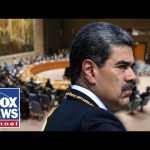
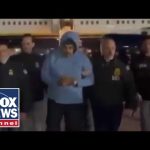
The implications of these decisions are not trivial. Discussions in Congress reveal a tension between maintaining national security and the risks involved in any military operation. Issa cautioned that if Congress had been briefed too early about a planned military operation, such as one targeting Venezuelan leader Nicolás Maduro, it could have compromised the mission and endangered American lives. This highlights a stark reality: when sensitive information gets out, it can lead to catastrophic consequences.
The conversation also ventured into the nature of U.S. involvement in Venezuela. At its core, the debate revolves around whether or not the U.S. should engage in nation-building or simply focus on ensuring that oppressive regimes, like Maduro’s, do not regain power. Issa expressed confidence that the United States’ role should be limited, stressing that past invasions and long-term commitments have often done more harm than good. Instead, supporting democracy in a restrained manner could lead to a prosperous Venezuela, returning it to a state where people are not fleeing the country under oppressive conditions.
Meanwhile, there are growing concerns about global security as power players like Russia and China observe the U.S. approach to military authority. Some critics argue that without strict limitations on military operations, other nations could interpret U.S. involvement as a green light for their own aggressive strategies. This complicates the international landscape, where misunderstanding or miscalculation could lead to significant geopolitical conflicts, especially in volatile regions such as Eastern Europe and Asia.
Amidst these discussions, it is clear that the path forward is fraught with challenges. Balancing national security interests and the ethical implications of military engagement is never straightforward. As Congress continues to grapple with these issues, the hope remains that a strategic approach can be taken that protects American interests while promoting stability and democracy abroad. The stakes are high, and eyes are closely watching how decisions in the coming months will shape the landscape not just for Venezuela but also for global security as a whole.