Staff Reports
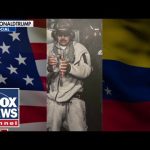
In a recent press conference at Mar-a-Lago, President Donald Trump made headlines around the globe as he discussed the U.S. military operation aimed at capturing Nicolás Maduro, the disputed president of Venezuela, and his wife. The president painted a dramatic scenario where Maduro is expected to be transported aboard the USS Iwo Jima for a flight to New York, where he faces serious charges. But perhaps the most striking revelation was Trump’s announcement that the U.S. would take the reins of Venezuelan governance during a transition period—a bold assertion that left many questions lingering in the air.
The president emphasized that U.S. forces would remain in Venezuela until a proper transition could take place. This statement elicited various reactions across the political spectrum, particularly among Republicans who have been skeptical of prolonged military engagements abroad. The president assured the public that there are “people working on it,” indicating that plans for managing the Venezuelan situation are already underway. However, the specifics of what that management entails remain unclear.
Among the notable moments from the conference was the president’s remark that the U.S. is not afraid of having “boots on the ground” in Venezuela. Historically, the U.S. has been cautioned against excessive military involvement overseas, so this direct statement raised eyebrows. Trump justified the presence of U.S. forces by arguing that a stable and friendly government in Venezuela is directly tied to American interests. Nevertheless, many are left to ponder: How long will the U.S. maintain this physical presence? And what does a “suitable transition” truly look like?
The president also shared insights about the potential leaders of Venezuela moving forward. He expressed doubts about the opposition leader, Marino Corina Machado, claiming that she lacks both support and respect in Venezuela. Instead, it seems the administration is leaning toward cooperating with the current vice president, hinting at possible negotiations. This shift in focus raises further questions about the direction of U.S. foreign policy in the region and whether it aligns with the “America First” agenda.
In addition to the political implications, Trump discussed the role of American oil companies in Venezuela’s future. He described the Venezuelan oil industry as having great potential, despite its troubled past. According to him, a strong American influence would help rebuild the country’s infrastructure and bring its oil back to market, providing a potential boon for both Venezuelans and American interests. However, the lingering embargo on Venezuelan oil serves as a roadblock that complicates these plans.
As the details from this press conference circulate, it is clear that America’s role in Venezuela is far from straightforward. While the U.S. military’s successful operation to apprehend Maduro is being praised, the broader implications of U.S. governance in Venezuela are met with skepticism. With many questions left unanswered and debates stirred within the Republican base regarding the extent of U.S. involvement, only time will tell how this bold chapter in U.S.-Venezuela relations will unfold.