Staff Reports
Former Secretary of State Mike Pompeo has made waves recently with his comments on the potential implications of the Trump administration’s foreign policy, particularly regarding the actions taken against Venezuela. It appears that leaders of rogue nations may need to pay attention, as the message sent is anything but subtle: the U.S. is serious about protecting its interests and standing against adversaries. With President Trump asserting that he will take measures to safeguard what matters to the American people, it’s clear that this administration doesn’t shy away from decisive action, even on foreign turf.
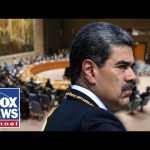
The spotlight is shining brightly on Nicolas Maduro, Venezuela’s long-standing controversial leader. The recent operations seem to suggest the revival of a modern Monroe Doctrine, where the U.S. takes an active role in the affairs of its neighboring nations. This could mark a turning point not only for Venezuela but also for other countries in the region. It serves as a reminder to nations like Cuba and potentially even Colombia that, under Trump’s leadership, the U.S. isn’t afraid to use force when necessary. For adversaries like Iran, which has frequently tested America’s patience, the message is clear: it would be wise not to underestimate the resolve of the U.S. when it comes to combatting threats.
The effects of this military action on American soil may not be as straightforward as some might hope. While many may not shed a tear for Maduro’s regime, the implications of such an operation are complex. It has been stated that most of the drugs flowing from Venezuela were targeting Europe rather than the U.S., which raises questions about how this operation might influence drug trafficking across American borders. The administration’s goal appears to be more about establishing regional stability than tackling domestic drug issues directly, although the hope is that a weakened Maduro brings about a more peaceful environment in the hemisphere.
When examining President Trump’s foreign policy, it is evident that he is navigating a tricky path. Unlike his predecessors, who often pursued extensive military engagements, Trump seems to favor a strategic approach that avoids unnecessary boots on the ground. This presents a fascinating test case for how effectively he can influence regime change without overwhelming military presence. History shows that managing a country without substantial U.S. military involvement can result in mixed outcomes, but Trump’s team is cautious—perhaps too cautious—about committing to a long-term plan for Venezuela.
Looking ahead, the prospects of a quick transition in Venezuela appear dim. Questions linger about the legitimacy of the current leadership following Maduro’s departure and how soon fair elections might occur. American companies that once thrived in Venezuela’s oil sector, like Chevron and Exxon, are likely watching closely as well. The question remains whether they would be willing to invest significant amounts back into a country that has been plagued by governmental instability and corruption. Without a stable political and security environment, it is hard to imagine a swift recovery or the return of significant foreign investment.
In short, while the actions taken against Maduro and the implications for Venezuela are indeed noteworthy, the real test will be in how the Trump administration navigates the aftermath. The stakes couldn’t be higher as they aim to not just reshape Venezuela but also to assert U.S. influence in a region long believed to be slipping under the influence of adversarial forces. America’s role in this saga remains to be seen, but if nothing else, it illustrates the idea that leadership—and decisive action—still matters in the modern world.