Staff Reports
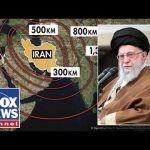
Tensions are escalating in the Middle East as breaking news surfaces about significant military actions targeting Iran’s top leadership. According to reports from a senior Israeli official, Israeli forces have conducted strikes against Iranian leaders, including the supreme leader Ayatollah Khamenei and President Masoud Peshkian. This bold move highlights Israel’s commitment to defend itself against threats arising from its neighbor, Iran, amidst a backdrop of civil unrest and violence within the country.
As the news unfolded, it quickly became clear that the situation is nothing short of alarming. Air raid sirens blare across major Israeli cities, including Tel Aviv and Jerusalem, as the Iranian military responds with ballistic missile fire directed at Israel. Citizens are hastening to bomb shelters, trying to make sense of the chaos erupting around them. The symbiotic relationship between the U.S. and Israel appears to have intensified, with American support critical to these coordinated strikes against key Iranian figures.
The stakes are incredibly high. With this prolonged military confrontation between Iran and Israel, the fear of a regional conflict looms large. Israel is geared up to defend itself with its multi-layered missile defense system, which includes the Iron Dome, David’s Sling, and other advanced systems like Aero 2 and Aero 3. The USS Gerald R. Ford aircraft carrier is also stationed nearby, representing a formidable naval presence that further solidifies America’s stance in the region.
Despite the high-alert situation, information regarding the effectiveness of these targeted strikes is still pending. Battle damage assessments, typically taking time to process, are awaited to gauge whether the attack met its objectives. This military maneuver is seen as a part of a larger strategy to dismantle Iranian leadership and minimize threats, a move some analysts describe as “cutting the head off the snake.”
While intercepted missiles rain down on Israel, sparking both panic and rapid defense responses, it’s noteworthy that the scale of attacks is less than what was experienced during previous conflicts. The coordinated strikes may have significantly diminished Iran’s capability to launch extensive missile barrages all at once. However, intelligence suggests that Iran has many proxies in the region, including Hezbollah and the Houthis, both of whom boast their own missile capabilities. This suggests that while Iran may be momentarily stifled, the long-term implications of increased regional tensions remain dire.
As Israel braces for what could be days or even weeks of confrontations, it remains clear that the situation continues to unfold with unpredictability. The Israeli populace, familiar with bomb threats and living in the shadow of missile attacks, now faces an uncertain future. In what seems like an endless cycle of retaliation and defense, one can only hope for a resolution amidst the clamor of sirens and explosions echoing through the streets. For the moment, Israel stands united, prepared to face the challenges that lie ahead.