Staff Reports
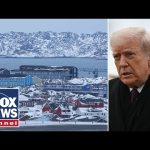
In a surprising move that is making waves across the Atlantic, President Trump has proposed new tariffs on Denmark and other European Union nations. This announcement, made on his social media platform, boldly asserts that the U.S. has long subsidized these countries by not imposing tariffs on their goods. Trump argues that it is high time for Denmark to “give back.” The assertion is that world peace hinges on Greenland, as both Russia and China have shown interest in the territory. This has led to the president’s declaration that starting February 1st, a 10% tariff will be applied to all goods from Denmark and other EU countries sent to the U.S.
As soon as the subject of Greenland came up, one commentator humorously remarked that someone had clicked on their heater—an obvious nod to the chilly relations brewing in diplomatic conversations. With sounds of laughter ringing in the background, the discussion took a serious turn as foreign leaders started responding to the tariffs. Kier Starmer, the leader of the UK Labour Party, asserted that Greenland is a part of Denmark and any discussions about its future should involve the people of Greenland and the Danish. He also emphasized that all NATO allies need to collaborate to tackle security threats from Russia, describing Trump’s tariff plan against allies as fundamentally wrong.
French President Emmanuel Macron also weighed in on the situation, calling the tariffs “unacceptable.” He warned that Europeans would respond to these threats in a unified and coordinated way if they were enforced. The confusion arose during the conversation, questioning why the U.S. would pay for NATO’s defense while simultaneously being perceived as a threat by its own allies. There seemed to be a paradox where the U.S. protects these countries from external dangers but is viewed with suspicion when it comes to strategic territories like Greenland.
Delving into history, some commentators pointed out that the United States has previously purchased islands from Denmark, such as the Virgin Islands in 1917. This historical perspective adds an interesting layer to Trump’s desire for Greenland, suggesting that acquiring the territory isn’t entirely out of the realm of possibility. It has even been said that establishing a strategic presence in Greenland aligns with the larger goal of bolstering U.S. military and space operations, given that a major Space Force base already exists there.
The airwaves were filled with amusing quips about Denmark’s ability to protect Greenland, with one host jokingly comparing Denmark’s protective efforts to a LEGO wall—playful imagery indeed! As discussions on military capabilities surfaced, the seriousness of the geopolitical stakes became apparent, especially when highlighting Russia’s advancements in nuclear-powered icebreakers. The historical context of U.S.-Russian tensions, especially during the Cold War, underscores the need for vigilance in the Arctic region.
In essence, President Trump’s new tariff policy is more than just an economic strategy. It encompasses national security, historical claims, and the delicate balance of global relations, especially within NATO. As the February 1st deadline approaches, the world watches closely to see if these tariffs will serve as a wake-up call for America’s allies, reminding them that the stakes in the Arctic are higher than ever. Will this move foster a spirit of cooperation or ignite further tensions? Only time will tell, but one thing is certain: the icy air of the Arctic is getting a lot warmer.