Staff Reports
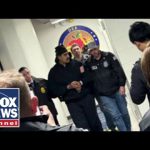
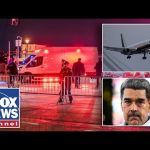
In recent days, the political climate in the United States has heated up considerably, especially in response to new developments regarding Venezuela and its controversial leader, Nicolás Maduro. Video footage has emerged showing Maduro reportedly in U.S. custody, igniting a frenzy of debate among lawmakers and pundits alike. The situation raises a host of questions about the legality and ramifications of U.S. military actions abroad, especially without the approval of Congress. Many are asking: Why wasn’t Congress briefed on such a significant operation?
A prominent voice in this discussion is Florida Congressman Byron Donalds, who has not held back in expressing his outrage. He argues that the attempt to instigate regime change in Venezuela was not only unauthorized but also fundamentally unconstitutional. Donalds has pointed out that while Americans are facing numerous challenges right at home, involving the U.S. in foreign troubles appears to be an ill-advised distraction. After all, the last thing the American public wants is more chaos when there are so many issues that require attention within the country.
Despite the outrage from some members of Congress, Donalds emphasizes that the Democrats’ newfound concern for “domestic prosperity” might be a façade, motivated more by opposition to President Trump than genuine care for America’s interests. He contends that the left’s support for a government led by Maduro—a figure associated with drug trafficking and collaboration with hostile regimes like China—is nothing short of baffling. To him, it showcases a disregard for both American and Venezuelan citizens who suffer under such leadership.
One of the more tactical aspects of this military operation was that it reportedly remained under wraps until executed, a rarity in Washington’s leak-prone environment. Donalds has applauded the decision of the President to keep such sensitive information compartmentalized, arguing that disclosing it to Congress could have compromised the safety of U.S. forces involved. With the stakes as high as they were, protecting the mission’s secrecy was crucial. He insists that it’s not practical to involve many political figures in the planning of military operations, especially when lives are on the line.
The forthcoming briefing with the President is expected to illuminate many of the finer details of this operation, including its implications for Venezuelan politics and U.S. foreign policy. Donalds anticipates that questions will arise regarding how the situation in Venezuela will evolve moving forward and whether the U.S. will continue to play an active role. This sort of engagement, he argues, is vital for maintaining stability in the region and curbing the influence of adversarial nations.
In summary, as the dust begins to settle on this high-stakes political drama, one thing is clear: the American people and their representatives are hungry for clarity. While some may see the operation as a necessary step in U.S. foreign policy, others are questioning the decision-making process behind it. Whether this will lead to a shift in how military actions are conducted moving forward remains to be seen, but for now, the debate continues. As the meeting with the President approaches, all eyes are on Congress, ready to contend with the complex realities that lie ahead.