Staff Reports
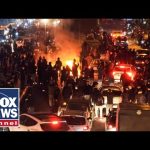
In recent developments that have captured the attention of the nation, President Trump is preparing for a briefing on the situation in Iran, where protests are sweeping across the country. The Iranian regime has responded to these protests with a heavy hand, employing deadly force against demonstrators. This serious situation prompted the U.S. State Department to issue a travel advisory, urging American citizens in Iran to leave the country immediately. The urgency of the advisory reflects concerns about safety due to the escalating violence.
As President Trump seeks to navigate these turbulent waters, he is considering a range of options that include military strikes, sanctions, and even cyber attacks. However, it seems he is currently focused on a more economic approach: tariffs. The president announced that any country engaging in business with Iran will face a hefty tariff of 25% on all transactions with the United States, which is designed to pressure the Iranian regime through financial means. There’s a clear message here: the White House is exploring all avenues of diplomacy but isn’t shy about wielding economic power when necessary.
Interestingly, while public declarations from Iranian leaders convey a desire for negotiations, the private messages they send to the U.S. hint at a more duplicitous agenda. The Iranian government has stated that they are not seeking war, but they are prepared for it. This contradictory stance raises eyebrows, especially as reports of brutal crackdowns on dissent continue to emerge. A young man, just 26 years old, faces the threat of execution for participating in protests, reinforcing the dire human rights situation in Iran.
The blackout imposed by the Iranian government is making it particularly difficult to gauge the situation accurately, with electricity and internet being cut off in many areas. This blackout is a tactic to prevent images of the protests from reaching the outside world, but thanks to satellite internet like Starlink—an initiative by Elon Musk—some footage has still made its way to the public eye. The stark contrast between the reactions to protests in Gaza versus those in Iran has not gone unnoticed. Many commentators are highlighting the apparent hypocrisy seen in the silence from various activist groups who were quick to support protests in Palestine but have remained muted regarding the plight of Iranian protesters fighting for their freedom.
Adding tension to the discourse is the observation that many on the left seem hesitant to acknowledge the plight of those struggling under the Iranian regime. Critics argue that this silence stems from an ideological conflict. They suggest that some sympathize with oppressors as long as it serves their narrative. This notion was articulated by a woman who escaped Iran and pointed out that the ideology among certain liberal circles keeps them from speaking up against the very terrorists that threaten lives in her homeland. She framed the struggles of Iranian people, especially women, as not merely a local issue, but a pivotal moment in the fight against global terrorism.
As discussions unfold at the White House and tensions remain high, it is clear that the Iranian situation will continue to be a focal point of American foreign policy. The dynamics of diplomacy, sanctions, and military considerations all play a role in shaping the United States’ response to the events that are happening abroad. As many wait to see what steps will be taken next, one thing is apparent: the cries for freedom within Iran are resonating on a global scale, and the world is watching closely.