Staff Reports
The world is watching as tensions with Iran continue to escalate. It appears there has never been a perfect time to visit this despotic theocracy, and right now is no exception. President Trump, with his flair for the dramatic, has set a deadline for nuclear talks with Iran, which has mostly been met with indifference from the Iranian leadership. As a result, the consequences for their stonewalling have become quite severe. Recently, Trump has made it clear that the time for negotiations is now, and he’s bringing attention to the brave protesters in Iran who deserve a better future.
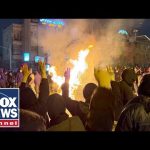
The situation in Iran is dire. The Iranian people have bravely taken to the streets, seeking freedom and democracy, only to face a brutal crackdown from their government. Many protesters have lost their lives in the struggle for their rights. While Americans are not shy about criticizing authoritarian regimes, the question arises: how much support can the U.S. provide to these courageous activists? The State Department has hinted at increased support, building on the maximum pressure policy implemented by Trump when he first took office. This policy aims to choke off revenue streams for the Iranian regime, preventing them from funding their terrorist operations and dangerous nuclear ambitions.
The State Department recently discussed strategies and actions taken to reinforce this maximum pressure policy. It appears that the intention behind these strategies is to ensure that the Iranian regime no longer has the financial means to run amok in the region. American efforts have reportedly intensified, with a strong focus on keeping the regime accountable for its actions against its own citizens. The discussions underline a commitment to support freedom-seeking individuals across the globe, specifically in oppressive regimes like Iran. As the crisis develops, the world is left to wonder just how effective these policies will be in yielding results.
As if the issues with Iran weren’t heavy enough, Cuba has also been a topic of discussion in the same breath. The Cuban regime, grappling with its own set of problems, has been painted as incompetent and incapable of managing its economy. With their primary ally, Venezuela, suffering from crippling sanctions, the Cuban government is facing a steep decline. The American administration is aware of this deterioration, and it seems there’s hope that Cuba might also seek a more favorable relationship with the U.S. Since the situation in both nations seems interconnected, it becomes increasingly clear that Trump has his sights set on not just Iran, but also ensuring the failure of oppressive governments in the region.
It is evident that the Trump administration is unwavering in its message to the power players in Iran. The Ayatollah and his inner circle are faced with a stern ultimatum from the White House: cease nuclear ambitions and stop the ruthless treatment of protesters in your streets. If they wish to pursue a different path, they must engage in meaningful negotiations with the United States. The stakes are high, and the message is transparent: compliance is the only option for the Iranian regime if they want to avert further consequences.
In summary, the American public can only sit back and observe as these two intertwined situations unfold. The approach taken by President Trump and his administration is aimed at pushing for accountability and encouraging democratic movements in places where freedom is sorely lacking. As the pressure mounts on these regimes, the hope is that they will be compelled to reconsider their actions for the sake of their people. In the meantime, advocates for freedom in both Iran and Cuba will undoubtedly continue to rally for change, while the U.S. maintains its role on the global stage, pushing for a more secure and free world.