Staff Reports
The political storm surrounding Venezuela took a dramatic turn as President Trump announced plans to run the country temporarily until a proper, safe transition can be established. His focus? To ensure peace, liberty, and justice for the people of Venezuela, including many Venezuelans living in the United States who want to return to their homeland. With fervent determination, Trump emphasized the importance of a “judicious” approach in handling the situation.
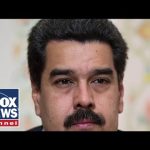
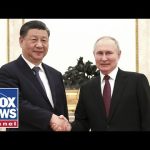
The political landscape is buzzing after Trump’s declaration, which raises questions about what comes next after the audacious military action aimed at the Venezuelan leader, Nicolás Maduro. The international community’s response has been a mixed bag of praise and disapproval. Venezuela, backed by its neighbor Colombia, is scheduled for an emergency meeting at the UN Security Council, seeking to address what they call U.S. military overreach. Meanwhile, certain global powers, most notably Russia and China, have voiced their disapproval, with Russia even labeling Maduro as the legitimately elected leader. However, this narrative doesn’t resonate with U.S. allies, many of whom hail Trump’s decisive actions as a long-overdue remedy for Venezuela’s suffering.
Among those allies, Israeli Prime Minister Benjamin Netanyahu did not shy away from expressing his admiration for Trump’s boldness. He recognized the “brilliant action” of American soldiers, implying that the operation was not just a strategic maneuver but also a moral imperative. French President Emmanuel Macron echoed this sentiment, advocating for a peaceful, democratic transition that respects the desires of the Venezuelan people. It seems that while some leaders rally around Trump’s aggressive stance, others stand firmly against it, illustrating the stark divisions in global perceptions of leadership and intervention.
Trump’s move marks the peak of a months-long campaign aimed at toppled Maduro, someone U.S. Ambassador to the UN Mike Waltz has called an “illegitimate dictator.” With the backdrop of heightened tensions, Madura’s regime is accused of swaying election results, and U.S. officials are ready to use full American might in dealing with what they claim are rampant drug cartels operating in Venezuela. As this military action unfolds, it becomes evident that the stakes are too high for both Venezuelans and the international community alike.
As anticipation grows, Nicolás Maduro prepares to arrive in New York City later in the evening. Following his capture, he is expected to be detained at the Federal Detention Center, signaling a significant moment in U.S.-Venezuelan relations. This episode marks a transformative period as political dynamics shift, and it remains to be seen how it will affect both countries in the coming months. The world is watching closely, and with both cheers and boos echoing across the globe, one thing is clear: the battle for democracy in Venezuela is far from over.