Staff Reports
The world is anxiously observing the unfolding situation in Venezuela, particularly following the United States’ recent actions against Nicolás Maduro, a leader many view as a dictator. With tensions heating up, the United Nations Security Council is preparing to hold a crucial meeting, labeled a “threat to international peace and security.” Scheduled for 10 a.m., leaders in Colombia have voiced their concerns, suggesting the U.S. may have crossed a line, setting a precarious precedent with its bold moves against Maduro.
The similarity between Maduro’s fall from grace and the historical takedown of Manuel Noriega, the infamous Panamanian leader, has not gone unnoticed. Just as Noriega eventually surrendered to U.S. forces and faced justice in Miami, many speculate that Maduro could meet a similar fate. Political experts like Bill Barr have made strong assertions that Maduro’s extensive list of crimes could lead him to being convicted for actions that are even more severe than those for which Noriega was held accountable.
But the big question looms: What would Maduro’s arrest mean for drug cartels that have significantly disrupted both local and international safety? The response to this question is complex, as it intertwines with the network of criminal activity that has flourished under Maduro’s regime. Former officials with direct knowledge of Venezuela’s government operations shed light on how the regime has allowed crime and terror to thrive. Since Hugo Chávez, Maduro’s predecessor, took power, the regime has transformed into a full-blown dictatorship, heavily relying on both domestic and foreign terrorists to retain control.
According to those familiar with the inner workings of this murky world, the Venezuelan government has long collaborated with organizations such as Hezbollah and Hamas, granting them passports and the freedom to operate. This has led to a chaotic environment where Maduro and his associates have enriched themselves at the cost of countless civilians. The web of corruption extends deeply within the government, with significant figures implicated in drug trafficking and other nefarious activities. The involvement of the Tren de Aragua, a notorious criminal group, has also raised alarms, as they have been linked to substantial drug shipments being funneled into the United States with the knowledge of Maduro’s inner circle.
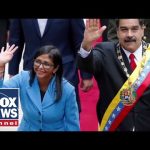
As the dust settles, Venezuelans who have fled their country may finally find hope for returning home. With approximately eight million displaced individuals yearning for stability, the arrest or downfall of Maduro could create a vacuum needing to be filled — ideally by leaders who are committed to true democracy and justice, rather than replications of Maduro’s dictatorship. However, fear still lingers over whether the current leadership, particularly Vice President Delcy Rodriguez, described as “deeply ambitious and socialist,” can be trusted to spearhead any form of needed transition.
Amidst all this uncertainty, there is no doubt that President Trump and his administration are closely monitoring the situation, strategizing how best to support Venezuela during these precarious times. The ongoing dialogues regarding the new leadership and transitional planning will undoubtedly shape the future of Venezuela. With hopes of turning the tide against crime and restoring peace, the eyes of the world remain fixed on this South American nation, keeping fingers crossed for a brighter tomorrow devoid of tyranny and fear.