Staff Reports
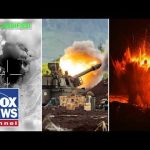
Operation Epic Fury has now entered its fifth week as the United States and its allies intensify a broad campaign aimed squarely at the Iranian regime’s nuclear and military infrastructure. What began as precision strikes against hardened facilities has evolved into a sustained effort to hollow out Iran’s ability to produce or transport weapons, while simultaneously signaling that the age of unchecked mullah‑controlled aggression in the Middle East is over. The latest U.S.‑Israeli strikes on key steel manufacturing sites—critical to Iran’s arms production—have the Trump administration touting that long‑sought‑after targets are finally being taken out, a rare instance of clear forward momentum in a region long defined by drift and appeasement.
The arrival of the USS Tripoli, carrying roughly 3,500 troops, including 2,500 Marines, has visibly shifted the regional balance of power. Positioned in the U.S. Central Command area, the amphibious assault ship and its embarked Marine Expeditionary Unit represent far more than a symbolic show of force; they are the backbone of a potentially limited ground operation inside Iran should the regime continue to defiantly pursue nuclear ambitions and regional destabilization. While the Pentagon has not formally announced an invasion, the built‑up presence clearly signals that Washington is prepared to move beyond drone strikes and air raids if the current pressure fails to alter Tehran’s calculus.
On the Israeli front, the situation remains volatile, with Iranian missile barrages striking deep into the Jewish state’s industrial heartland. The recent strike on a chemical facility near Beersheba, sending plumes of black smoke across the Negev desert, was a chilling demonstration of how recklessly Iran is willing to weaponize civilian infrastructure. Israel’s energy and industrial sectors are now clear targets, as Tehran seeks to punish the country for its participation in the U.S.-led campaign. Yet instead of breaking Israeli resolve, these attacks have hardened public opinion and underscored the necessity of fully degrading Iran’s missile and drone capabilities before the regime can inflict even greater damage.
Hezbollah’s role in the conflict has only added to the volatility, as the Iran‑backed group continues to launch rockets across the Lebanese border, striking an oil refinery in Haifa and sending columns of smoke over one of Israel’s most important industrial hubs. This cross‑border fire is not random terrorism; it is a deliberate Iranian strategy to stretch Israeli defenses, ignite wider regional fighting, and test the limits of American patience. The United States now finds itself coordinating with Israel not only to blunt missile and drone attacks, but also to ensure that proxy forces in Lebanon and other arenas do not drag the region into a broader, multi‑front war that would risk American troops and regional stability.
With both diplomacy and military pressure running in parallel, the outcome of Operation Epic Fury will hinge on whether the United States is willing to maintain maximum pressure until the Iranian regime faces a choice: accept crippling limits on its nuclear ambitions and terrorism sponsorship, or risk its own survival. The Trump administration’s insistence that the campaign is “ahead of schedule” reflects a strategy that rejects the failed incrementalism of past presidencies and instead bets on speed, force, and clarity. For American families sending their sons and daughters into the region, the hope is that this moment of danger finally yields a Middle East in which the United States calls the shots, not the mullahs in Tehran.