Staff Reports
Something ugly unfolded near RAF Fairford, the Gloucestershire airbase where American bombers sit ready for operations tied to the Iran fight. Prime Minister Andy Burnham now says there are “strong indications” Iran played a part — a claim that matters because we’re not talking about a street fight, but a site that could be a target in a very real geopolitical war.
What happened at RAF Fairford
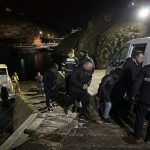
Five men were arrested after police found three vans parked near the perimeter of RAF Fairford and launched a major counter‑terror response. Bomb‑disposal teams and a security cordon followed; counter‑terror investigators treated it as potentially serious, detaining the suspects under explosives laws before later releasing them on police bail.
RAF Fairford isn’t some empty field — it hosts U.S. strategic bombers involved in operations connected to Iranian targets. That makes anything suspicious in the area more than a local crime story; it’s a security flashpoint with international consequences.
“Strong indications” — what that means, and what it doesn’t
Prime Minister Andy Burnham’s line that there are “strong indications” of Iranian involvement is headline‑grabbing for a reason. It dovetails with blunt language from U.S. players — Secretary of State Marco Rubio saying a foreign actor was involved and President Donald Trump warning the suspects “were looking to do big damage” — but it’s also vague: what intelligence points the finger? Signals intercepts, handler communications, or financial trails would be the kind of evidence that separates confident attribution from speculation.
Defence Secretary Wes Streeting has urged caution, rightly saying investigations are ongoing and warning against being cowed by sabre‑rattling. Meanwhile the Iranian embassy in London called the allegations “unfounded and malicious,” which is predictable. What’s not predictable is whether our security services will show the public enough to justify a claim that a hostile state had a hand in plotting against a joint UK‑US installation.
Why ordinary people should care
Because this isn’t an abstract intelligence exercise. If hostile state actors can recruit or direct young men in our cities to come within striking distance of a base hosting U.S. bombers, the risk to civilian neighborhoods, aircrew, and local businesses climbs. Gloucestershire residents saw police cordons and bomb squads; commuters saw traffic snarled; parents had to answer questions about a threat that felt far away until it touched their road.
There’s also a democratic cost. The suspects are reported to be British nationals in their 20s who were later bailed — a bail decision that will inflame public debate about how the justice system balances civil liberties against national security. People have a right to know why bail was permitted in a case tied to explosives near a sensitive airbase.
What officials owe the public next
Intelligence can’t be dumped in the papers, but official claims should be backed by enough detail to be credible: what sort of evidence gave rise to “strong indications”? Were the arrests intelligence‑led or the result of a tip? What did forensic exams of the vans find — residue, components, or nothing? Clear answers will matter to allies and to everyday citizens worried about safety and the rule of law.
The U.S. and U.K. will keep working together on this, and more revelations are likely as investigators trace phones, payments and travel. But governments can’t ask citizens to accept the most serious charge — that a hostile state had a hand in a plot on allied soil — on rhetoric alone. If the evidence is real, say so plainly. If it isn’t, say that too. Because when national security and civil liberties collide, secrecy without accountability is the luxury of the ruling class, not the protection of the people.
So here’s the question for every worried parent, commuter, and taxpayer: will our leaders give us the facts we need to judge whether we’re safer, or will they hide behind vague phrases and let fear do the talking?