Staff Reports
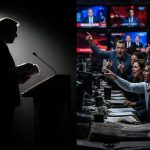
President Donald Trump took to primetime this week to talk about what he calls big weaknesses in our elections — and he did not hold back on the people he thinks are helping hide the problem. His speech accused foreign actors of probing voter systems and blasted major broadcast networks for refusing to carry his address live. That showdown is now the story: did networks do the right thing by staying off their main channels, and can the president legally yank their broadcast licenses like he suggested?
Networks snubbed the speech — what really happened
ABC and NBC chose not to preempt their main broadcast channels and instead made the speech available on streaming platforms, saying they would provide anchored coverage and break in if something major happened. CNN treated the address as a news event rather than putting it on their linear feed. Fox and a handful of other outlets carried the speech live. Call it editorial judgment or cowardice — either way, the corporate TV gatekeepers decided viewers would find the president’s remarks outside the old-school evening lineup.
Trump’s charge: ‘Fraud like this should mean a revocation of their licenses’
The president used his platform to call out what he labeled biased coverage and urged the Federal Communications Commission to consider revoking network licenses for networks that “refuse” to air his speech. He said networks are using public airwaves worth billions and should be held accountable for protecting what he called a “fraud” on elections. It was blunt, direct, and exactly the kind of rhetorical sledgehammer that forces the media to decide whether it will answer substance or style.
Claims vs. evidence — the real test
What fact-checkers and agencies note
Independent newsrooms and fact-checkers watching the speech flagged that many of the allegations were familiar and not backed by fresh, conclusive evidence that would overturn past election results. Yes, U.S. agencies and reporters have documented foreign probing and influence efforts by states like China, Russia, Iran and others — but documented probing is not the same as proof a vote count was flipped. Networks say they are cautious for that reason. Conservatives can be right to worry about vulnerabilities while still demanding the receipts that change the debate from complaint to action.
Revoking licenses: political theater or real policy?
Calling for license revocations plays well to a base that distrusts legacy media, but it’s not an easy switch to throw. The FCC can review broadcasters, and its chair has talked tougher lately. Still, legal experts say revoking a license is a long, messy process that courts would likely scrutinize hard. If the president really wants to force accountability, the right path is to demand documents, declassify any evidence his team claims to have, and push Congress to hold hearings — not depend on a sudden regulatory purge that would look like punishment for coverage decisions. In the meantime, viewers will keep voting with the remote and the stream button, and the networks will keep deciding what counts as news. That ought to make everyone — media and politicians alike — work harder to make their case publicly and honestly.