Staff Reports
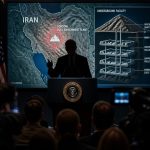
President Donald Trump told Iran in the Oval Office, on camera and without hedging, “they haven’t seen anything yet.” He said it while hosting President Joseph Aoun of Lebanon — a line meant to land both in Tehran and in the living rooms of capitals watching for signs the U.S. is ready to back words with force.
What he said — and what it changes
The remark wasn’t a throwaway soundbite. It was a live, public escalation layered on top of a months-long campaign of U.S. strikes against Iranian military facilities and proxy capabilities. With U.S. forces actively striking Iranian command centers, missile and drone sites, and maritime assets, a president’s “they haven’t seen anything yet” is a policy message as much as it is theater.
That kind of rhetoric narrows diplomatic wiggle room. When you tell an adversary publicly that you’re prepared to do more, they have to decide whether to back down or to match you — and matching means people die, ships get turned away from trade lanes, and local civilians pay the price.
Military moves, retaliation risk, and the Strait of Hormuz
This isn’t abstract. U.S. and allied strikes earlier in the year — followed by fresh operations described by CENTCOM — have already raised the stakes across the Gulf and eastern Mediterranean. Iran has answered with warnings and actions that threaten commercial traffic in the Strait of Hormuz, and Tehran’s commanders say they’re ready to respond if strikes continue.
That’s the blunt arithmetic: more strikes, more risk to American service members and to global energy flows. Secretary of Defense Pete Hegseth and regional commanders know that. So does every ship captain recalculating routes and every household watching gas pump prices inch higher because geopolitical risk has a way of showing up on consumer bills.
Lebanon, Hezbollah, and the regional chessboard
President Joseph Aoun came to Washington carrying a plan that hinges on convincing the U.S. and Israel to back a framework for southern Lebanon — disarm Hezbollah, redeploy Israeli forces, and try to stabilize a tense border. Secretary of State Marco Rubio has been shepherding those talks, because Washington knows a violent, armed Hezbollah on Lebanon’s soil is a magnet for wider war.
But a public, chest-thumping warning to Iran complicates those delicate negotiations. Hezbollah isn’t some abstract enemy on a map; it’s embedded among towns and farms where ordinary Lebanese and northern Israeli families live in fear of rockets and reprisals. Diplomacy needs quiet leverage; bluster hands Tehran a propaganda win and gives Hezbollah cover to dig in.
Why working Americans should pay attention
We don’t get to outsource the consequences of foreign adventurism. If the president is going to escalate, voters deserve straight answers: what’s the endgame, what limits are in place, and how will Americans be kept out of a grinding regional fight? Strength matters. So does strategy. You can’t credibly defend the homeland if the plan looks more like improvisation than policy.
Rhetoric can deter — or it can provoke. Which will this be? Will that public warning to Tehran protect American lives and keep trade lanes open, or will it pull us deeper into a conflict that costs blood and wallets?