Staff Reports
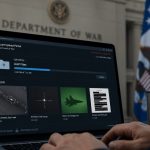
The Department of War just dropped a bombshell that has people from every corner of the country talking. Under President Donald J. Trump’s directive, the administration launched PURSUE — the Presidential Unsealing and Reporting System for UAP Encounters — and posted the first public tranche of declassified UAP (UFO) files at WAR.GOV/UFO. Call it Release 01. Call it 162 files. Call it the thing that finally made everyone stop arguing about everything else for a hot minute.
What the release actually is
PURSUE and the new portal are the first time the federal government has tried a coordinated, rolling declassification of UAP material. The Department of War, led by Secretary of War Pete Hegseth, worked with ODNI, AARO, NASA, the FBI, the Department of Energy and other agencies to comb through decades of records. The idea was simple: make the files public, no security clearance needed, and let people look for themselves. That kind of transparency is rare in Washington, and yes, it’s the right move if you care about accountability.
What’s in Release 01 — and what it doesn’t prove
The first drop includes about 160-plus items — widely reported as 162 — made up of photos, videos and PDFs. Some of the more eyebrow-raising stuff involves Apollo-era images and transcripts (think Apollo 12 and Apollo 17) where astronauts describe “very bright particles” and odd objects near the lunar module. There are also FBI photos, including frames from New Year’s Eve 1999 reportedly showing dark objects near U.S. aircraft, plus infrared military videos from more recent years. Before anyone books a ticket to Alpha Centauri: analysts warn these files do not automatically prove alien tech. Many items are unresolved, some are low-quality, and a number are redacted or lack full context. Skeptics and believers alike will have to do the hard work of analysis.
Traffic numbers, transparency claims, and the questions that remain
Chief Pentagon Spokesperson Sean Parnell touted massive interest — roughly 340 million hits in the first 12 hours, according to his post — which is either proof the whole country paused to look at the sky or proof the internet likes a good mystery. Either way, public interest is through the roof. That’s a good thing. Still, we need clarity on what was redacted and why, how future tranches will be vetted, and whether independent labs, NASA scientists, and trusted academic teams will get access to raw sensor data. The Department says this is a rolling process. If they mean it, then keep releasing. If they don’t, the suspicion machine will only crank up louder.
Why conservatives should cheer — and stay skeptical
Too often Washington hoards information and treats voters like children. This administration’s move toward declassification is a welcome change. It aligns with conservative values: accountability, oversight, and letting the public see what their government knows. But being pro-transparency doesn’t mean swallowing every mysterious photo whole. Demand rigorous analysis. Push for independent verification. Make sure national-security concerns are balanced with public knowledge. And yes, enjoy the show — but don’t let wild internet theories replace careful science. Whether this ends with mundane explanations, classified blunders, or something stranger, PURSUE has opened a door. Now it’s up to researchers, journalists, and citizens to walk through it and keep Washington honest.