Staff Reports
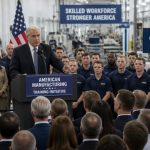
The Trump administration has rolled out a new pitch to rebuild American industry: the Foundry School. Launched publicly by Vice President J.D. Vance with backing from Secretary of State Marco Rubio and Under Secretary Jacob Helberg, the program is being sold as a fast track to get more engineers, technicians and entrepreneurs into factory floors and chip fabs. It is squarely tied to the State Department’s Pax Silica push to secure AI‑era supply chains and keep critical technology out of hostile hands.
What the Foundry School Is
The Foundry School is a workforce‑training program run across eight university campuses with a core curriculum reportedly developed by Stanford and taught by industry founders and CEOs. The administration says it will target the skills gap in semiconductors, defense, robotics and advanced manufacturing. Officials point to business demand — hundreds of thousands of open manufacturing jobs and a projected need for millions more trained workers over the next decade — as the reason this program exists.
Why this matters for American manufacturing
For years elites shipped our factories overseas and then acted surprised when supply chains broke. The Foundry School speaks to a real problem: factories need skilled people, not just fancy policy memos. If it actually trains young Americans for good‑paying, technical work in places like chip plants and defense shops, this could be the kind of heavy‑lifting the country needs to win the AI era and shore up national security.
Tough questions they need to answer
Funding, placements and real scale
Speechmaking is cheap; showing results is not. Who is paying for this long term? How many students per year? Will employers guarantee apprenticeships or jobs, or is this mainly resume polish? An eight‑campus pilot sounds promising as a start, but it won’t magically fill a multi‑million‑person skills gap by itself. Conservatives should cheer the ambition and still demand metrics: placement rates, employer commitments, cohort sizes and accountability for taxpayer dollars.
Politics, promise, and a simple test
No one should pretend this launch is the final answer — this is a beginning and a message. Politically, it lets President Trump’s team show voters a tangible plan: making things here, hiring Americans here. That’s a powerful message, and it deserves a real program behind it. If the Foundry School turns rhetoric into apprenticeships, paychecks and secure supply chains, it will deserve praise. If it turns into another photo op, conservatives should roast it — and then fix it — with both barrels.