Staff Reports
The Justice Department’s announcement this week that Brenda Lee Brown Armstrong agreed to plead guilty to a federal felony for paying people to register to vote is proof that voter fraud is not just a political talking point. It is a real problem with real consequences — and it exposes a weak spot in our election system that common-sense reforms like voter ID would help fix.
What the DOJ found
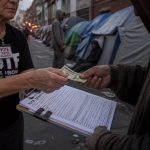
Federal prosecutors say Armstrong, a long-time petition circulator, admitted to paying people — often residents of Skid Row — small sums, cigarettes or phone cards to fill out voter registration forms. The scheme allegedly included using other people’s addresses, and even Armstrong’s own former address, to make those registrations look valid. DOJ officials, including Assistant Attorney General Harmeet K. Dhillon and First Assistant U.S. Attorney Bilal A. “Bill” Essayli, said undercover video from a citizen journalist prompted the investigation. Armstrong has agreed to plead guilty to one felony count that carries a statutory maximum of up to five years in prison. That plea still must be entered and accepted by a judge, but the evidence the Justice Department laid out is unmistakable.
Why this matters for election integrity
Some will wave this off as a single bad actor and call the whole thing an outlier. Maybe it is. Maybe it’s not. Either way, it shows how the current system can be gamed. Paying circulators per “valid” signature creates a built-in motive to produce registrations by any means necessary. When people can be paid a few dollars or a pack of cigarettes to sign a form and a false address is used to make it look legitimate, we’ve moved from civic participation to a market for manufactured votes. Even if most elections are clean, isolated fraud like this corrodes public trust and invites more brazen schemes unless we harden the rules.
Simple fixes: Voter ID and stronger rules for circulators
Let’s be blunt: voter ID is not a cure-all, but it’s a basic, reasonable step that prevents some of the simplest forms of fraud. Requiring ID at registration and at the ballot box, tightening rules for paid petition circulators, banning payment for registrations, and stepping up enforcement would make this sort of scheme harder and riskier. We can protect access for eligible voters while also making the penalties steeper for those who try to buy registrations. If the left wants more trust in elections, fighting fraud should be a priority, not an inconvenience to ignore.
DOJ’s move to prosecute this case is welcome. It shows prosecutors will act when evidence appears. Now lawmakers and election officials should follow through with rules that reduce the chance of repeat offenses. Ignoring this episode and calling it “rare” won’t fix the weakness that allowed it. Treating elections like a precious public trust means protecting them from people who would turn votes into a cash-for-signature business. That’s common sense — and it’s time we acted like it.