Staff Reports
Recent Ukrainian drone strikes have shredded Russia’s resupply lifeline to Crimea and forced Moscow to close the Kerch Strait and large parts of the Sea of Azov to civilian traffic. This isn’t a one-off raid. It is a concentrated campaign of UAV and unmanned surface vehicle strikes that reportedly disabled dozens of Russian ships in just days. The result: Crimea risks being cut off, wheat exports are frozen, and the Russian supply machine is sputtering.
What happened, in plain terms
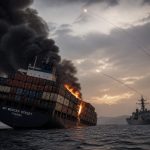
Ukrainian drone swarms have hit scores of Russian vessels — tankers, tugs, cargo ships — in a sustained push to choke off seaborne logistics to occupied Crimea. Videos and field reports show the strikes aimed at engines, bridges, and fuel systems to “mission kill” ships without necessarily sinking them. Russia’s answer was to halt commercial navigation through the Kerch Strait and the Sea of Azov, effectively stopping grain shipments and clogging ports with disabled vessels. If you thought naval power meant controlling the seas, apparently it now means hoping your tugs don’t get babysat by a drone.
How Ukraine did it — and why it works
This campaign didn’t spring up overnight. Ukraine first hit rail lines, bridges, highways, and logistics hubs to close land routes into occupied areas. With the land lanes choked, supply shifted to ships — and that’s when Ukraine’s unmanned systems concentrated on the sea. Swarms of medium-range drones and unmanned boats can swarm a busy shipping lane, hit key systems, and render a vessel unusable. The strategy is smart and cheap: disable enough targets and you create a blockade without sending carriers or battalions.
Why the fallout matters — locally and globally
The most urgent danger is a humanitarian squeeze on Crimea. Cut off from steady power, water, and food, civilians will feel the pain before politicians admit it. Beyond that, global markets watch wheat and oil flow through these routes. A frozen export channel raises prices and strains food security worldwide. The Kremlin’s crude answer — closing seas to keep civilians safe — reads more like admitting it cannot secure its own supply lines.
What should be done next
The U.S. and allies should treat this as both a tactical success for Kyiv and a strategic moment to act. That means accelerating support for Ukraine’s unmanned systems, hardening allied maritime routes, and creating safe corridors for civilian supplies and grain exports. It also means ramping up diplomatic and economic pressure on Moscow so they stop using civilians as leverage. If the West dithers, the result will be a deeper humanitarian crisis and a global economic hit — all thanks to Russia’s inability to keep its own boats afloat.