Staff Reports
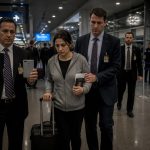
The FBI arrested a California woman at Los Angeles International Airport after accusing her of acting as an unregistered agent of the People’s Republic of China. Federal agents say Wanying “Heather” Zhang was trying to board a flight to Shanghai after allegedly surveilling Ting‑Yu Lai, the son of President Lai Ching‑te of Taiwan. The criminal complaint paints a picture of covert travel, secret messages, and old‑fashioned spy tradecraft — right here on American streets.
What happened at LAX?
According to the criminal complaint, FBI counterintelligence agents tracked Zhang as she prepared to leave the country. Prosecutors allege Zhang traveled to Seattle in 2025, filmed and photographed the target and his family outside their home, and sent images and license‑plate numbers back to people she acknowledged as PRC government contacts. Investigators say they recovered WeChat messages and iCloud backups that include her communications and even instructions to use AirDrop to avoid leaving a digital trail. She was arrested at LAX and charged under the statute that bars acting as an unregistered agent of a foreign government (18 U.S.C. § 951).
Why this matters: leverage, influence, and a pattern
The affidavit warns of the obvious: photos of a leader’s relatives and their cars could be used for leverage in a crisis. That isn’t cloak‑and‑dagger fiction — it’s plain old geopolitical blackmail. This arrest fits a clear pattern of PRC‑linked operations inside the United States, and it shows why counterintelligence matters. Credit the FBI and the Justice Department for catching this one before a plane took her out of reach. If you like peace through strength, you should like law enforcement that acts before the damage is done.
The realtor angle and soft infiltration risks
It’s worth noting Zhang and her husband work as realtors for a firm that mostly serves Chinese buyers. That fact isn’t proof of wrongdoing by nine‑tenths of people in the business, but it highlights how foreign influence can hide in ordinary jobs. Real estate and other community ties give cover for surveillance or influence operations. If foreign governments are quietly embedding collection assets in everyday professions, we can’t keep treating that as a business‑as‑usual problem.
What must happen next
Prosecutors should follow the evidence and hold anyone involved accountable. Congress ought to keep pressure on the agencies to share what they learn and to close policy gaps that allow foreign intelligence activity on U.S. soil. We also need smarter vetting and better awareness of tools like WeChat and AirDrop when used to move sensitive info. In short: applaud the arrest, demand the hard work that follows, and stop pretending foreign adversaries will play by polite rules if we don’t enforce ours.