Staff Reports
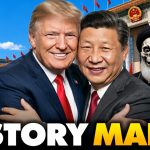
President Donald Trump arrived in Beijing this week for a high-stakes summit with President Xi Jinping. The meeting was never just about trade and chip rules. Mr. Trump is expected to press Xi on a far grimmer charge: that Chinese companies and networks have helped funnel military and dual-use gear to Iran — gear that may have been used to target American forces. This is about national security, not nice talk over tea.
High-stakes meeting in Beijing
This summit is a test. President Donald Trump goes to Beijing with a list: Iran, Taiwan, supply chains, and trade. But the Iran angle has teeth this time. The U.S. has publicly accused China-linked entities of supplying satellite imagery and parts that could help Iran’s weapons and missile programs. That is not a diplomatic whisper — it is a formal allegation backed by recent U.S. sanctions.
Sanctions and the evidence
The State Department and Treasury moved to name and sanction several entities tied to Iran’s military procurement networks. Secretary of State Marco Rubio’s office put out the announcement. The actions target companies in mainland China and Hong Kong accused of providing imagery or components used in Iranian strikes. Some of the public reporting points to satellite imagery and parts for drones and missiles — what experts call “dual-use” tech. We may not see every classified detail, but the government felt the case was strong enough to impose penalties.
Trump’s leverage: tariffs and tough talk
President Trump hasn’t been shy about the tools he’s ready to use. He’s publicly floated large tariffs — even a 50 percent levy — on countries found supplying military aid to Iran. At the same time he calls President Xi “a great gentleman” and says they have a good relationship. Translation: the president wants to keep a channel open while he squeezes Beijing where it hurts — trade and finance. It’s blunt, it’s real, and it’s exactly the kind of pressure China understands.
Why this matters for Americans
If the allegations are true, this is not some foreign policy abstraction. It touches U.S. troops, our allies, and the safety of Americans in the Middle East. We should want clear answers and commitments from Beijing. A private handshake won’t cut it. The White House must secure real, verifiable steps that stop the flow of weapons and dual-use tech to Tehran. No more excuses, no more plausible deniability. If Xi wants stability and energy flowing through the Gulf, he should act like it — or face the consequences President Trump is promising.